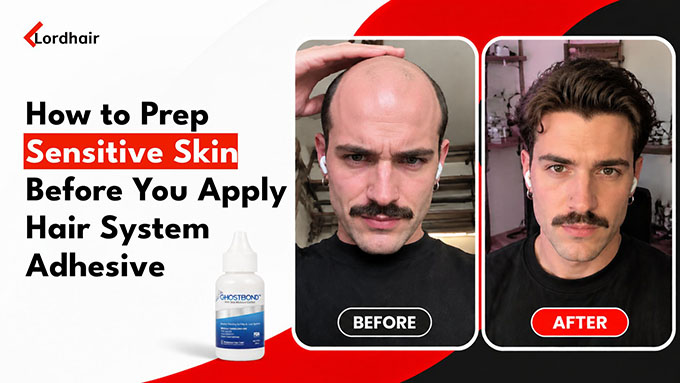
How to Prep Sensitive Skin Before You Apply Hair System Adhesive
- Written by Sarah Rowland
- | Published Nov 9, 2026
- |
- 5 min read
 Listen to the full text
Whether you are applying tape or glue to secure your hair system, sensitive skin requires a calm, clean, and completely dry surface. Oil, sweat, leftover remover, or existing irritation can weaken the bond and make it difficult to identify the root cause of any skin reaction.
If you are preparing for your first hair system, your main goal is not finding the strongest adhesive available, but building a simple, reliable routine that supports the health of your scalp and your comfort. Choose suitable products carefully, be sure to patch test everything beforehand, and stop immediately if your skin displays warning signs such as redness or stinging.
Key Takeaways
- Clean, Dry, Unbroken Skin: Provides the safest, most reliable starting point for hair system adhesives.
- Exact Patch Testing: Always test the exact glue or tape you plan to wear before doing a full scalp application.
- Label Realities: Hypoallergenic and latex-free labels reduce common risks, but do not guarantee a product will suit your unique skin.
- Warning Signals: Burning, swelling, spreading redness, blisters, or persistent itching require immediate adhesive removal and discontinuation.
- Gentle Removal: Peeling your hair system back slowly at a low angle minimizes friction injuries and tape stripping.
What to Buy Before Your First Hair System Arrives
Knowing your adhesive supplies and how to use them for when your hair system arrives makes your first attachment smoother and far less stressful. You don’t need a large collection of products, just the essentials and this also makes it much easier to troubleshoot if your skin reacts. You can buy many of the products through our website when buying your hair system too.
Should I buy an ‘adhesive and tape kit’ with my hair system?
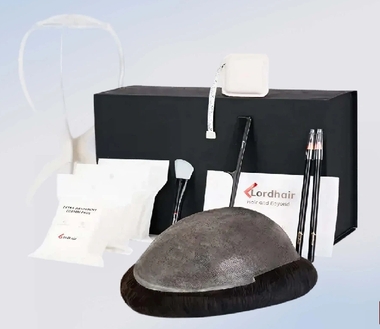
Purchasing a starter kit alongside your hair system can save on shipping costs and ensure you have basic tools ready. However, if you have a sensitive scalp, generic bundled accessories or solvents may not suit your skin type.
Research your options, review the ingredient lists, and read the usage instructions carefully before ordering. Introduce new products one at a time, starting with the smallest practical amount, and patch test each product before full application. If there are ingredients that you know you are sensitive to, you can verify product formulations in advance. Our expert support team is always available to help if you are unsure.
Lordhair Black Friday is on. From Nov 1 to 30. ZyroSen SuperSkin-V Starter Pack comes with free styling and a 3R travel kit (or 10 EBP tapes outside the US). It's the perfect time to get it and save the hassle of getting all accessories piece by piece.
What glue should I prepare before buying a hair system?
Select liquid adhesive based on your scalp sensitivity, hair system base, desired wear duration, and daily lifestyle. A stronger hold is not better if it complicates removal or causes skin inflammation.
Liquid adhesives suit users looking for a continuous bond and seamless finish, while water-based formulas are often preferred for sensitive scalps because they are gentler and easier to clean. Compatibility with the base is equally important because skin bases lend themselves well to liquid adhesives, whereas lace and hybrid systems are often better suited to dedicated tapes.
Never apply liquid glue over broken, sunburned, freshly shaved, itchy, or inflamed skin. If you are using a scalp barrier film, make sure it’s compatible with your glue and allow it to dry completely before applying adhesive.
What tape should I prepare before buying a hair system?
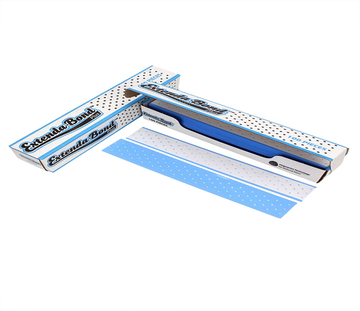
Choose tape that matches your hair system base, the attachment area, and the required level of hold that you need. Pre-cut contour strips can fit curved scalp areas comfortably, while straight strips work well along uniform hairlines.
For sensitive skin, prioritize tapes that are described as latex-free, hypoallergenic, breathable, or formulated for sensitive scalps. These labels are helpful guides, though they do not eliminate all reaction risks. Avoid stretching tape during application and follow the recommended setting times before exposing the bond to water, sweat, or heat.
For detailed guidance on how to choose a toupee tape, read this Hair System Tape Guide
Choosing Adhesive If You Have Sensitive Skin
What hair system tape is best for sensitive skin?
For sensitive skin, you can choose a medical-grade tape that is compatible with your system base and offers secure hold and gentle removal. Hypoallergenic MBT-1W3 medical-grade bonding tape or breathable EBP tapes are excellent, well-regarded choices for delicate scalps.
Apply the tape to clean, dry, unbroken skin without pulling or stretching. During removal, apply a compatible solvent, like C-22 Solvent, and peel the tape back slowly, keeping it parallel to the scalp. Stop using the tape if persistent redness, itching, burning, or soreness develops.

What hair system glue is best for sensitive skin?
There is no single glue that suits every sensitive scalp. Select a formula your skin tolerates well, compatible with your system base, and easily removable without damaging the top layer of your skin.
Look for latex-free, fragrance-free adhesives that are formulated specifically for scalp or medical attachment. Apply a thin, even layer to your clean skin, keeping heavy oils and moisturizers away from the bonding area so that it doesn’t affect the stickiness.
Why You Should Patch Test First
A patch test identifies adverse reactions before adhesive covers your entire scalp. This step is really common and critical if you have a history of eczema, contact dermatitis, allergies, or sensitivity to medical adhesives.
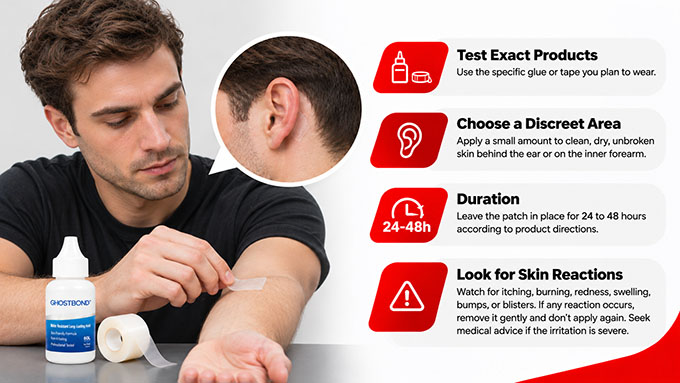
- Test Exact Products: Use the specific glue or tape you plan to wear.
- Choose a Discreet Area: Apply a small amount to clean, dry, unbroken skin behind the ear or on the inner forearm.
- Duration: Leave the patch in place for 24 to 48 hours according to product directions.
- Look for Skin Reactions: Watch for itching, burning, redness, swelling, bumps, or blisters. If any reaction occurs, remove it gently and don’t apply again. Seek medical advice if the irritation is severe.
Remember though, even a clear patch test doesn’t guarantee a full scalp application will be problem-free. Larger surface coverage, extended wear times, perspiration, heat, and repeated removals can alter your skin’s response. Within your first full wear, see it as a continuation of your product trial and be aware of any changes to your skin.
Redness or Stinging — What's Actually Going On
Mild pinkness immediately after removal is often caused by light pressure or pulling and should settle quickly. However, stinging or burning during or after application signals an active issue that needs your immediate attention.
Is redness or stinging on the scalp caused by hair system adhesive?
It can be. Scalp discomfort can stem from direct chemical irritation, allergic contact dermatitis, or medical adhesive-related skin injury (MARSI). It can also be triggered by strong removers, tape backing friction, trapped sweat, or applying products over pre-damaged skin.
Direct irritation typically remains localized, feeling sore, dry, tight, or itchy. Allergic reactions often begin similarly but can intensify and spread beyond the contact area, accompanied by swelling, raised bumps, or blisters. If you feel sharp burning upon application, remove the hair system gently using a proper solvent rather than trying to endure the discomfort.
Is scalp redness from adhesive allergy or poor cleaning?
Redness can result from either, or a combination of both. Not cleaning your scalp or the hair system properly can leave behind old adhesive residue, solvent oils, sweat, or heavy cleansers. This buildup weakens the bond, increases friction, traps moisture, all of which can irritate your scalp.
An allergy is more likely when the symptoms are persistent, intensely itchy, spreading, or accompanied by swelling and blisters. Cleaning issues show themselves when bonds fail prematurely or skin improves once buildup is eliminated.
To maintain a clean baseline make sure you wash your scalp with a gentle, fragrance-free cleanser, rinse it thoroughly, and clear the adhesive residue using a proven solvent like C-22 Adhesive Solvent. Be sure to avoid aggressive scrubbing, harsh exfoliants, and applying products over inflamed skin.
Does Long-Term Adhesive Use Damage Your Skin?
Adhesive wear shouldn’t damage healthy skin, but repeated exposure to unsuitable products, excessive wear schedules, or aggressive removal methods can compromise the skin barrier over time. Continuous friction, trapped perspiration, harsh solvents, and physical tape stripping gradually weakens your skin’s natural defenses.
Tape stripping occurs when tape removal pulls away protective outer layers of skin, leaving redness, tenderness, flaking, or raw patches. Once compromised, skin stings more easily during future applications.
It’s important to protect your scalp by allowing it to rest when it’s sore or red. After you remove your hair system, gently clean residue, let the area dry, and apply a lightweight, fragrance-free moisturizer during breaks if needed. Be sure to avoid scrubbing or reapplying adhesive until your scalp looks and feels completely normal. Apply the thinnest effective layer of glue, keep skin relaxed during application, and remove the system quickly if you notice any reactions. Consult a dermatologist if irritation recurs regularly.
When to Stop and See a Doctor
If you develop any of the following symptoms then remove your hair system immediately and stop using the adhesive:
- Severe burning or persistent, intense itching
- Marked swelling, hives, or blistering
- Spreading redness or open, weeping skin
- Severe or throbbing scalp pain
Never attempt to cover reacting skin with fresh adhesive or stronger tape. Seek prompt medical care if the symptoms are severe, appear infected, or fail to resolve once you have removed your hair system and carefully cleaned the area. Seek emergency medical attention immediately for any facial swelling, difficulty breathing, or dizziness.
Before visiting a doctor, list all products you have used, including adhesives, tapes, solvents, scalp barriers, and cleansers, along with total wear durations. This helps healthcare professionals determine whether the issue is contact allergy, irritant dermatitis, mechanical trauma, or a combination.
Conclusion
To conclude, a safe and comfortable hair system experience begins before your first attachment. By selecting compatible products in small quantities, performing thorough patch tests, and applying adhesives only to clean, healthy skin, you protect your scalp barrier and ensure a long-lasting bond.
Take your time to build a gentle routine tailored to your scalp's needs. Explore Lordhair's comprehensive selection of adhesives, tapes, and removers to find safe, reliable options for your maintenance routine. And remember, if scalp irritation persists, pause attachment and consult a qualified healthcare provider.
If you need help with hair system installation and maintenance, a free consultation with a Lordhair expert can help you get started with ease.

FAQs
Can I apply hair system adhesive after shaving my scalp?
This isn’t advisable. Your freshly shaved skin will often have micro-cuts and minor irritation that may not be immediately visible. Wait until your skin is calm, intact, and free from stinging before applying adhesive. You could shave your head in the evening, and apply your hair system the next morning. Trimming hair close to the scalp can be a gentler alternative for individuals prone to razor burn or irritation.
Should I use a moisturizer before applying glue?
No. Avoid applying moisturizers, oils, sunscreen, or petrolatum to the attachment area immediately prior to bonding, as they leave a film that weakens adhesion. Think about how difficult it is to apply a plaster to your skin if you have just applied oil or cream. Use moisturizer during adhesive-free breaks, and make sure your scalp is completely clean and dry before attachment.
Can I keep wearing my system if the redness is mild?
If redness is brief and clearly linked to normal removal pressure, it should settle quickly. However, redness that persists, spreads, itches, burns, swells, or forms blisters is a definitive reason to stop. Never attempt to cover active skin irritation with fresh adhesive.
What should I do if the tape will not come off easily?
Never pull tape upward or rip it away from the scalp forcibly. Hold adjacent skin steady, apply a compatible adhesive remover along the edge, wait as directed, and work slowly in small sections. Stop if skin becomes painful or starts to lift.
References
- Barton, A., Broadhurst, D., Hitchcock, J., Lund, C., McNichol, L., Ratliff, C. R., Moraes, J. T., Yates, S., & Gray, M. (2024). Medical Adhesive-Related Skin Injury at 10 Years: An Updated Consensus. Journal of Wound, Ostomy & Continence Nursing, 51(5S), S2-S8. https://doi.org/10.1097/WON.0000000000001116
- NHS Contact Dermatitis: https://www.nhs.uk/conditions/contact-dermatitis/
- NHS Anaphylaxis: https://www.nhs.uk/conditions/anaphylaxis/