

How to Choose the Right Hair Density for a Hair System
- Written by Winter Li
- | Published May 17, 2021
- | Updated Jun 3, 2026
- |
- 4 min read
 Listen to the full text
A lot of men get their hair system base right, match the color well, and use the proper attachment method. But still, their hair system looks off. What's the reason? It is because if the hair density you choose is too full or too thin, the whole result suffers.
Hair system density is one of the most important decisions you'll make, and one of the most misunderstood. Many people assume that more hair equals a better result. In practice, it's the opposite. A density that doesn't match your natural hair or your age is one of the main reasons a hair system looks detectable.
This guide breaks down what density actually means, what affects it, how to adjust it for a natural result, and how to choose the right level to match your lifestyle.
Key Takeaways
-
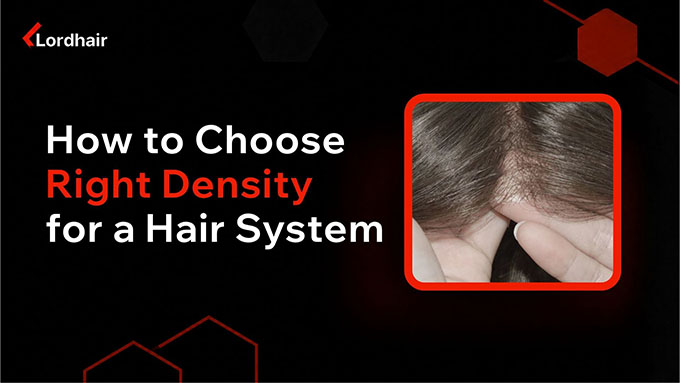
Hair system density is measured as a percentage of hair coverage on the base. Lordhair provides density from 60% (extra light) to 160% (heavy).
-
More density doesn't mean a better result. A density that doesn't match your bio hair or your age looks unnatural.
-
Density is influenced by your age, your remaining hair, your base type, your hairstyle, and the climate you live in.
-
Density can technically be adjusted after delivery, but it's not recommended. Getting it right upfront is always the better approach.
What Is Hair Density in a Hair System?
Hair density refers to the amount of hair attached to the base of a hair system. It's expressed as a percentage of what a full, average head of hair would look like at 100%. You may find that some hair systems have a density higher or lower than 100%. A higher percentage means more hair on the base, which creates more volume. A lower percentage means fewer hairs, producing a lighter, finer result. The right density isn't the highest one. You should pick the one that matches your natural hair and suits your age.
Lordhair offers the following density levels for both stock and custom hair systems:
Factors That Affect Which Density You Should Choose
Hair density is not a percentage that you pick randomly. Before you make a decision, there are a few different factors you should consider. Each one of them can affect how natural the final result looks.
Your Remaining Bio Hair
Your hair system needs to blend with the hair you still have at the sides and back. If your bio hair is fine or thin, a dense hair system will create a noticeable contrast at the edges. Choose a density that matches your existing hair as closely as possible for a seamless blend.
Age
Hair naturally thins as you get older. A 100% density that looks realistic on a 25-year-old can look unnaturally full on a 55-year-old. Choosing an age-appropriate density is one of the simplest ways to make a hair system look genuinely believable.
Hairstyle
Thicker hair is suitable for layered or textured cuts. Finer hair tends to suit more blunt, close-cropped styles, or styles with added curl to give the appearance of more volume. The hairstyle you want will partly determine how much density you need in the base to make it work.
Base Material
Not every base material works with every density. For example, a skin base can support 80%-120% density, depending on base thickness. When choosing a density, always confirm it's compatible with the base material you're ordering.
Climate and Lifestyle
If you live in a warm climate or sweat frequently, a lighter density reduces heat buildup at the scalp. Lower density means less hair mass sitting against your skin, which makes a real difference in comfort when it's warm. Conversely, if you're in a cold environment and want a fuller look for styling purposes, a medium density may work better for you.
Density, Realism, and How to Get the Balance Right
Most stock hair systems come at a standard medium light density (100%). This works well for most men with male pattern baldness because it sits in the middle of the range. It's full enough to cover, and natural enough not to look perfect.
If 100% isn't right for you, there are two ways to adjust.
Order a Lighter Stock System
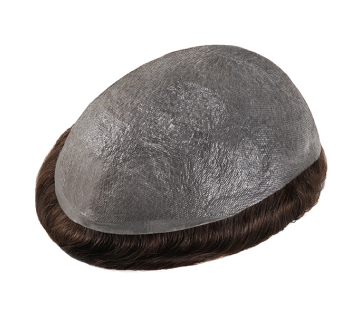
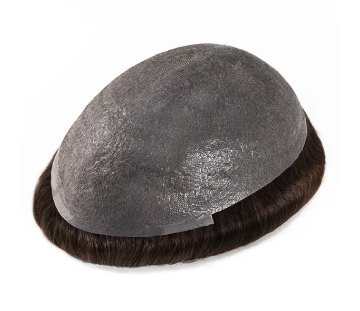
Several Lordhair stock models come in lighter density variants. The Lite UTS sits at 80% on an ultra-thin skin base. The Lite SuperSkin-V is built at 90%, suited to men with thinner bio hair who want the ease of a thin skin system without the mismatch in density. These options let you get a lighter result without the lead time of a custom order.
Use a Custom Order for Precise Control
A custom hair system gives you full control over density across the entire base. You can set different density levels for different zones. For example, lighter at the hairline and temples, slightly fuller at the crown. This is how natural hair actually grows. A gradual density transition from front to back creates a result that looks far more believable than a uniform density throughout.
Custom orders take 8–12 weeks to produce (6–7 weeks with rush service). For most men, the investment makes sense if their requirements fall outside what stock systems can cover.

What Actually Makes a Hair System Look Natural
Density alone doesn't determine how realistic a hair system looks. Several other factors also affect the final result:
-
Hairline construction: In lace systems, the front knots are usually bleached to remove the dark dot at the base of each strand, making the hairline look like hair growing directly from the scalp. In skin systems, V-looped or injected hair creates the same effect. Find the hair systems with the most undetectable hairlines.
-
Base material color: The base should match your scalp tone. Lace comes in flesh tone to dark brown; thin skin bases are typically translucent, which makes them versatile for any skin tone.
-
Hair color and texture: Real hair has natural variation. A single flat color can look artificial. Matching the texture (straight, wavy, curly) and including any highlights that appear in your natural hair makes the system far more convincing.
-
Base size and fit: If the base doesn't cover your hair loss area precisely, the edges will be visible where your system ends, and your bio hair begins. Accurately measuring the size is the first step for a seamless result.
-
Haircut and styling: The hair system needs to be cut to blend with your bio hair at the sides and back. A good stylist who understands hair systems can make a significant difference to the final look. Lordhair also provides haircut service, making the hairpiece ready for wearing upon arrival.
Does Density Affect the Hair System Price?
Density itself doesn't add to the cost of a hair system in most cases. What affects the price is the base material, the hair quality, and whether you're ordering stock or custom.
Here's a general price reference for Lordhair hair systems by base type, along with the density options available for each:
|
Base Type
|
Starting Price
|
Lifespan
|
Density Options
|
Lordhair Examples
|
|
Super thin skin (0.06–0.10mm)
|
$249
|
3–4 months
|
90%–120%
|
SuperSkin-V, Lite SuperSkin-V
|
|
Ultra Thin Skin (0.02–0.03mm)
|
$239
|
1 month
|
80%–100%
|
UTS, Lite UTS
|
|
Lace
|
$329
|
3–4 months
|
80%–120%
|
Champion, Air
|
|
Hybrid
|
$289
|
3–4 months
|
100%-120%
|
NEO, Inception-FL
|
|
Monofilament
|
$209
|
3–6 months
|
80%-90%
|
Cosmos, Lite Cosmos
|
|
Custom (any base)
|
$329
|
Varies
|
60%–140%
|
Full customization available
|
For a detailed breakdown of hair system costs, read Non-Surgical Hair Replacement and Toupee Cost: Pricing Insights.
How to Choose the Right Hair Density
Now you know how hair density affects the realism of a hair system. You may still be wondering how to choose a density that fits you best. Nathan, Lordhair's CXO and a hair system wearer himself, put together a short video walking through density recommendations for different age groups.
Watch: Hair Density Explained — Find Your Perfect Hair System
To learn more about how to choose and order a hair system, check out these guides:
- Men's Hair Systems Explained: The Complete Guide
- How to Order a Hair System for Men: The Complete Guide
Choosing Density Doesn't Have to Be Complicated
Many men are worried about getting hair system density wrong. The key to getting it right is simple: match the density of your real hair and your real age, not to what you think looks impressive.
If you want to explore your options or you're not sure where to start, you can use the Lordhair AI search to get instant guidance before placing an order. Lordhair's support team is also available for a free consultation.
Free Expert Consultations
From personalized hair loss solutions to expert advice, choose your path to a perfect fit with our diverse and specialized support.
 EMAIL
EMAIL FAQs
Does density affect my base choice?
Yes. Lighter densities need a finer, more invisible base material. Thicker base materials can support heavier densities. They are more durable, but at the cost of some naturalness.
Can I thin out a hair system after it arrives?
You can, but it's not recommended. Thinning with scissors after arrival can leave short stubble at the base that can feel rough against the scalp, or you may even damage the hairpiece if you are not skilled enough. A better approach is ordering the right density from the start.
I ordered the same density twice, but the two units look different. Why?
Hair systems are handmade, and slight variation is normal. Lordhair is working to minimize this, but small differences in density between units can occur when each one is ventilated by hand.
What density should I choose if I'm unsure?
Medium light (100%) is the most popular starting point for men. It looks natural without being obviously thick. If your bio hair is noticeably thin or fine, drop to 90% or 80%. When you have questions, you can get advice from Lordhair AI or contact Lordhair's customer service. A quick conversation can prevent an unnecessary reorder.
Are Lordhair's density percentages the same as other suppliers?
Not necessarily. Different factories use their own density scales. Lordhair uses its own standard, from 60% (extra light) to 160% (heavy). If you've ordered from another supplier before, don't assume the percentages will look the same.
share