


Hair Loss Statistics 2026: The Complete Global Guide (Men, Women, Age, Ethnicity & Mental Health)
- Written by Lordhair Team
- | Published May 28, 2026
- |
- 12 min read
 Listen to the full text
Hair loss is one of the most widespread yet underreported health concerns on the planet. It doesn't discriminate by gender, age, or background and its impact extends far beyond the scalp. From confidence and career to clinical depression and social withdrawal, losing your hair can quietly reshape an entire life.
This guide compiles the most comprehensive, up-to-date statistics on hair loss available in 2026. Whether you're experiencing it yourself, supporting someone who is, or simply want to understand the full picture, these numbers tell get you the full story.
Key Takeaways
1. Hair loss is universal. Over half the world's population will experience it. It is not a niche issue — it touches almost everyone at some stage of life.
2. It starts earlier than people think. 25% of men begin balding before 21. 40% of hair loss patients are now aged 20–39. Women are affected earlier and more severely than public discourse acknowledges.
3. Most people wait far too long. 74% of people noticed their hair loss 5 or more years before taking action. Earlier intervention — regardless of treatment type — produces better outcomes.
4. Geography and ethnicity matter — but differently for different types. Europeans and those of European descent have the highest rates of pattern baldness. Asian Americans are most affected by autoimmune alopecia. Black women face unique and chronically underdiagnosed challenges with scarring and traction alopecia.
5. The mental health toll is clinically serious. Nearly half of people with hair loss meet criteria for a clinical anxiety disorder. 39% lifetime depression prevalence. 85% of women report reduced self-esteem. Social phobia affects nearly one in two alopecia areata patients. Hair loss is not vanity — it is a genuine public health issue.
6. Women suffer more, and are served less. Women experience worse psychological outcomes across every measured dimension — 85% self-esteem impact vs. 62% in men, 78% reporting shame and depression, 63% citing career effects, 40% reporting marital problems. Yet they are underrepresented in research, undertreated, and underserved.
7. COVID-19 added millions to the affected population. Between 25% and 61% of COVID patients experienced hair loss, mostly telogen effluvium. The pandemic accelerated a pre-existing global trend.
8. Treatment works — and restores more than hair. 66% of finasteride users see regrowth. 85% of minoxidil users see some benefit. 90–97% of hair transplant patients report satisfaction. 72% of cosmetic solution users report enhanced confidence. Self-esteem scores improve measurably post-treatment.
9. Non-surgical solutions meet a massive, underserved need. 42% of hair loss sufferers prefer non-surgical options. Hair systems and wigs offer immediate results with no surgery, no side effects, and no waiting period — making them the most accessible and versatile solution available.
10. Integrated care is the future. The science is clear: treating the scalp without treating the person is treating only half the problem. Leading researchers now recommend combining dermatological, psychological, and psychiatric support. The hair loss brands that understand this deeper reality will lead the next generation of care.
1. What Are the Most Important Hair Loss Statistics in 2026?
-
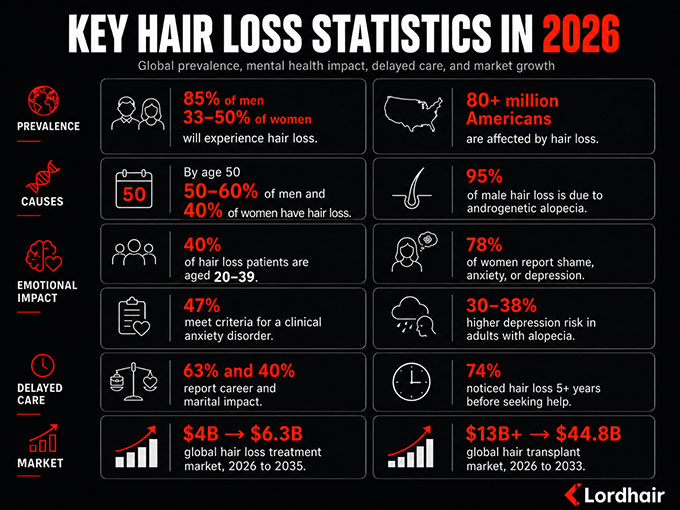
85% of men and 33–50% of women will experience hair loss at some point in their lives.
-
Over 80 million Americans are currently affected by hair loss.
-
By age 50, approximately 50–60% of men and 40% of women experience significant hair loss.
-
95% of male hair loss is caused by androgenetic alopecia (male pattern baldness).
-
40% of hair loss patients are now aged 20–39 — the condition is getting younger.
-
78% of women with hair loss report feelings of shame, anxiety, or depression.
-
A 2025 meta-analysis of 5,553 patients found nearly 47% of individuals with hair loss meet the criteria for a clinical anxiety disorder.
-
Adults with alopecia areata are 30–38% more likely to be diagnosed with depression.
-
63% of women with hair loss report career-related problems; 40% report marital problems.
-
74% of people noticed their hair loss 5 or more years before seeking help — stigma and denial are delaying care.
-
The global hair loss treatment market is valued at approximately $4 billion in 2026 and projected to reach $6.3 billion by 2035.
-
The global hair transplant market is valued at over $13 billion in 2026, heading toward $44.8 billion by 2033.
2. How Many People Experience Hair Loss?
Hair loss is among the most common conditions in the world, affecting people of all ages, sexes, and backgrounds. The sheer scale of the problem is often underappreciated.
-
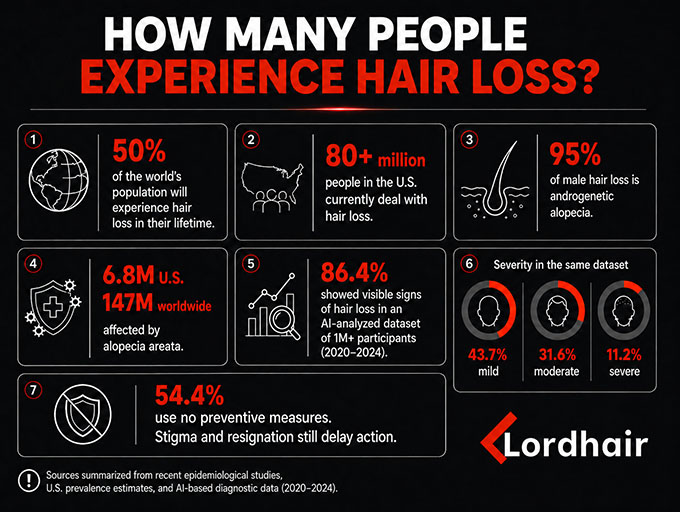
More than 80 million men and women in the United States alone currently deal with hair loss.
-
Globally, it is estimated that around 50% of the world's population will experience noticeable hair loss at some point in their lifetime.
-
Androgenetic alopecia (pattern hair loss) accounts for the majority of cases — roughly 95% of all male hair loss.
-
Alopecia areata, an autoimmune form of hair loss, affects approximately 6.8 million people in the US and 147 million people worldwide at any given time.
-
In a dataset of over 1 million participants analyzed by AI-based diagnostic tools (2020–2024), 86.4% of respondents showed visible signs of hair loss.
-
Within that same dataset, 43.7% reported mild hair loss, 31.6% moderate, and 11.2% severe.
-
A striking 54.4% of people with hair loss use no preventive measures whatsoever — reflecting the deep stigma and resignation still surrounding the condition.
Hair loss is not a fringe concern. It is one of the most universally experienced physical changes in human life — and one of the most under-addressed.3. At What Age Does Hair Loss Start?
Age is the single most consistent predictor of hair loss. The older a person gets, the higher the probability of some degree of hair thinning or loss — though it can, and does, start surprisingly early.
At What Age Do Men Start Losing Their Hair?
|
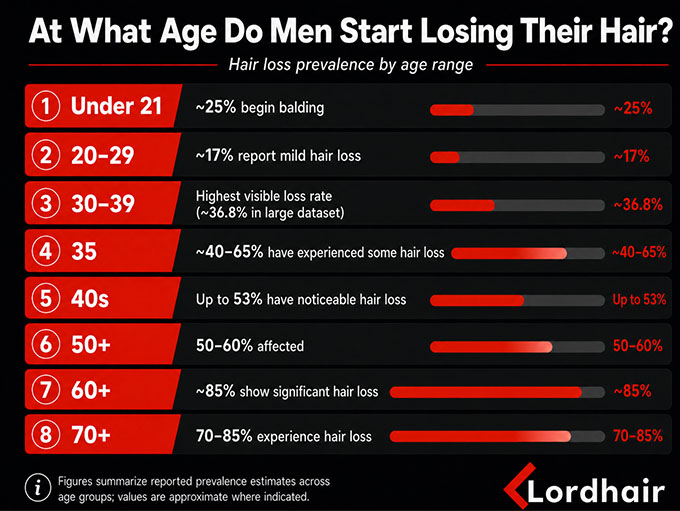
Age Range
|
Hair Loss Prevalence
|
|
Under 21
|
~25% begin balding
|
|
20–29
|
~17% report mild hair loss
|
|
30–39
|
Highest visible loss rate (~36.8% in large dataset)
|
|
35
|
~40–65% have experienced some hair loss
|
|
40s
|
Up to 53% have noticeable hair loss
|
|
50+
|
50–60% affected
|
|
60+
|
~85% show significant hair loss
|
|
70+
|
70–85% experience hair loss
|
-
Remarkably, approximately 25% of men begin balding before the age of 21.
-
By age 35, roughly 40% of men experience significant hair loss.
-
By age 65, an estimated 53% of men and 37% of women will experience baldness.
-
17% of men aged 20–29 already report mild hair loss — this is very much a young person's issue too.
At What Age Do Women Start Losing Their Hair?
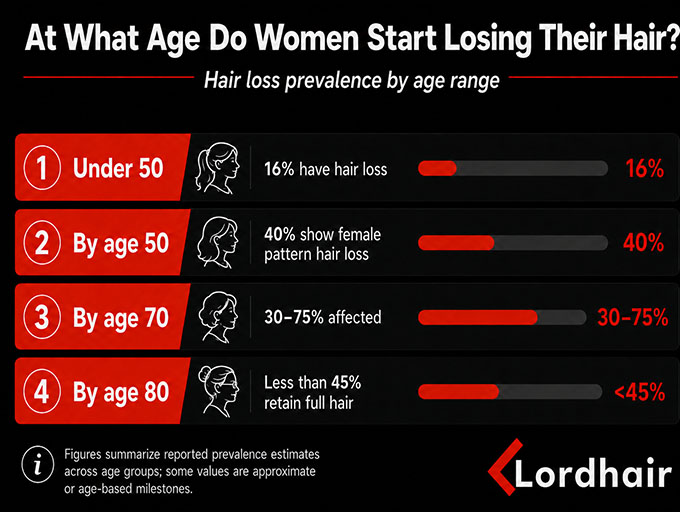
Women are often left out of the statistical conversation on hair loss. But the data tells a significant story:
|
Age
|
Hair Loss Prevalence
|
|
Under 50
|
16% have hair loss
|
|
By age 50
|
~40% show female pattern hair loss
|
|
By age 70
|
30–75% affected
|
|
By age 80
|
Less than 45% retain full hair
|
-
2–3% of women experience female pattern hair loss by age 30.
-
By age 50, approximately 40% of women show female pattern hair loss — a figure that runs sharply higher than most public-facing estimates.
-
By age 70, approximately 30–75% of women are affected, depending on the study and definition used.
-
Among women over 65, approximately 40% show signs of visible thinning.
-
23% of women aged 18–65 report their hair being thinner, compared to 18% of men in the same age group.
Is Hair Loss Getting More Common in Young People?
One of the most significant and underreported trends in 2026 is the rising incidence of hair loss in people under 40. This is not just anecdote — the numbers are moving.
-
In South Korea — often a leading indicator of broader global trends — 40% of all hair loss patients are now aged 20–39, a figure that has risen 2.7% over four years.
-
Last year alone, 39,079 people in their 20s and 51,619 people in their 30s in South Korea sought professional hair loss treatment.
-
South Korea's largest online hair loss community has over 250,000 members — and 45% of them are aged 25–35.
-
Women in their 20s now represent 31% of hair loss product buyers in South Korea.
-
In China, 58.9% of young people cite staying up late as their primary cause of hair loss, signaling that lifestyle factors — not just genetics — are accelerating onset.
-
18% of individuals under 30 globally report some hair shedding due to stress or environmental factors.
-
50% of women cite stress or anxiety as the primary trigger of their hair loss.
The data from South Korea is particularly instructive because the country has among the world's most developed hair loss awareness, treatment infrastructure, and open social discourse around the topic. What happens there tends to anticipate what happens everywhere else.
4. Do Men or Women Lose More Hair?
The conventional wisdom is that hair loss is a "man's problem." The numbers complicate that significantly.
Who Is More Likely to Experience Hair Loss?
-
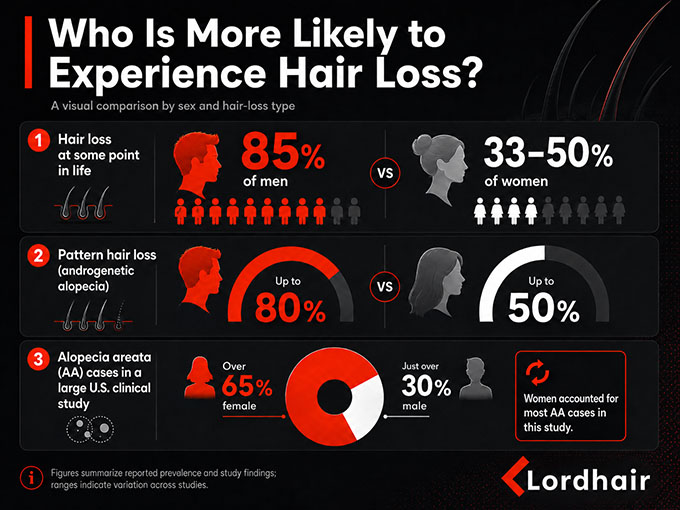
85% of men and 33–50% of women will experience hair loss at some point in their lives.
-
Up to 80% of men and up to 50% of women will experience pattern hair loss (androgenetic alopecia) specifically.
-
In a large US clinical study, over 65% of alopecia areata (AA) cases were female and just over 30% male, flipping the common assumption.
What Causes Hair Loss in Men vs. Women?
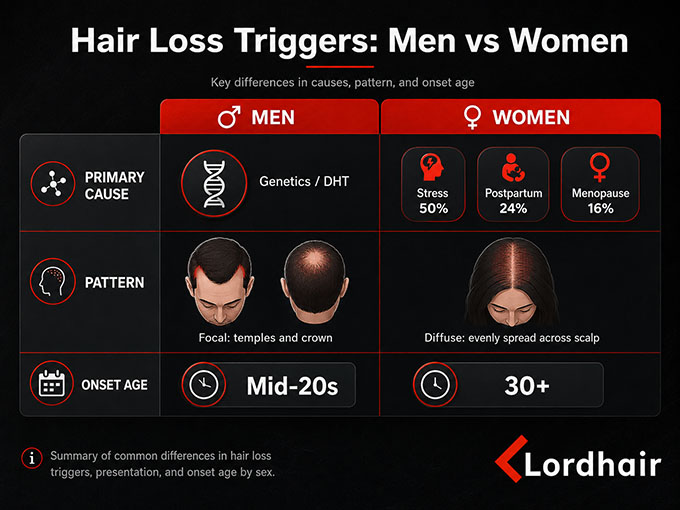
The causes of hair loss differ significantly between sexes:
|
Trigger
|
Men
|
Women
|
|
Primary cause
|
Genetics / DHT
|
Stress (50%), postpartum (24%), menopause (16%)
|
|
Pattern
|
Focal: temples and crown
|
Diffuse: evenly spread across scalp
|
|
Onset age
|
Often mid-20s
|
Often 30+
|
-
50% of women identify stress or anxiety as their primary hair loss trigger.
-
24% of women trace their hair loss to postpartum hormonal changes.
-
16% of women link their hair loss to menopause.
-
95% of male hair loss is attributed to androgenetic alopecia (male pattern baldness driven by DHT).
Does Hair Loss Affect Men and Women Differently?
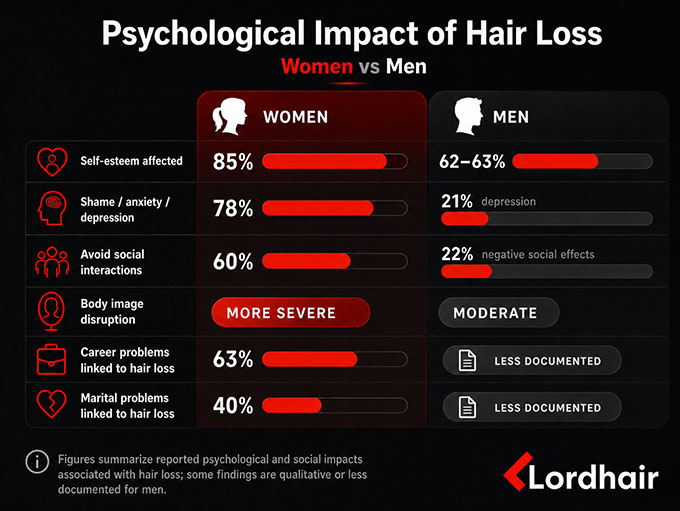
Despite men losing hair at higher rates, women consistently report worse psychological outcomes:
|
Psychological Impact
|
Women
|
Men
|
|
Self-esteem affected
|
85%
|
62–63%
|
|
Shame / anxiety / depression
|
78%
|
21% depression
|
|
Avoid social interactions
|
60%
|
22% negative social effects
|
|
Body image disruption
|
More severe
|
Moderate
|
|
Career problems linked to hair loss
|
63%
|
Less documented
|
|
Marital problems linked to hair loss
|
40%
|
Less documented
|
The reason for this gap is partly cultural: hair is more tightly bound to conventional femininity than to masculinity. For many women, hair loss doesn't feel like an aesthetic setback — it feels like an attack on identity. Despite experiencing this disproportionate burden, women remain significantly underrepresented in both public conversation and clinical hair loss research.
5. Which Countries Have the Highest and Lowest Hair Loss Rates?
Geography matters when it comes to pattern hair loss. Genetic heritage tied to ancestral regions plays a significant role in prevalence, though lifestyle factors are increasingly influential.
Which Countries Have the Highest Male Hair Loss Rates?
|
Rank
|
Country
|
Male Hair Loss Rate
|
|
1
|
Spain
|
44.50%
|
|
2
|
Italy
|
44.37%
|
|
3
|
France
|
44.25%
|
|
4
|
Czech Republic
|
42.79%
|
|
5
|
United States
|
42.68%
|
|
6
|
Germany
|
41.24%
|
|
12
|
United Kingdom
|
40.09%
|
-
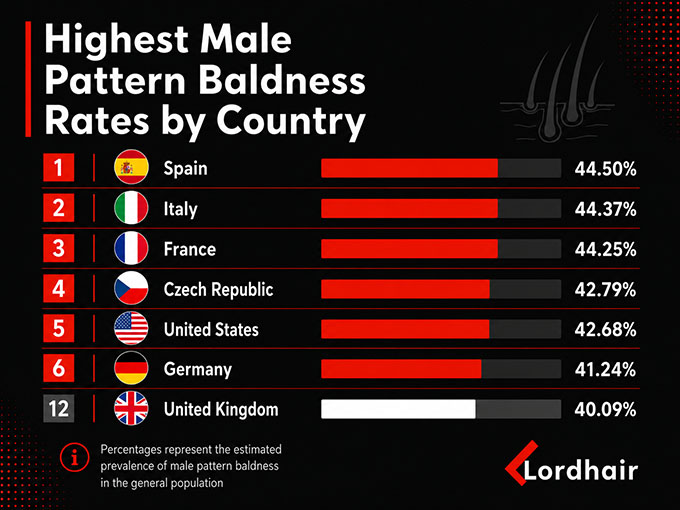
Europe dominates the global rankings, with 8 of the top 12 countries with the highest male hair loss rates located on the continent.
-
The United States ranks as the highest non-European country, at 42.68%.
Which Countries Have the Lowest Male Hair Loss Rates?
|
Country
|
Male Hair Loss Rate
|
|
Indonesia
|
26.96%
|
|
Colombia
|
27.04%
|
|
Philippines
|
~28%
|
|
Malaysia
|
<30%
|
|
Argentina
|
<30%
|
|
China
|
30.81%
|
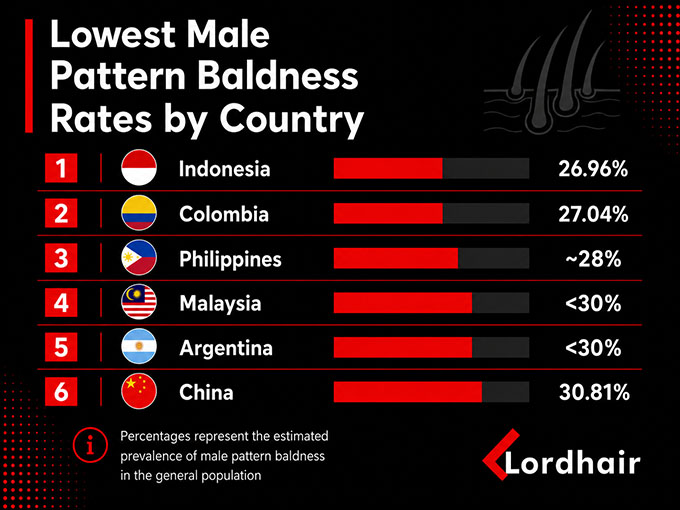
The contrast between the two tables is striking: men in Spain are nearly 70% more likely to experience pattern baldness than men in Indonesia. This is almost entirely attributable to genetic heritage, not lifestyle.
What Do Hair Loss Trends Look Like in Key Countries?
China: Hair loss has become a major cultural flashpoint. JD.com reported a 387% surge in hair loss shampoo sales in a single quarter. Young Chinese adults cite staying up late (58.9%) as their top perceived trigger. Despite lower rates of androgenetic alopecia relative to Europeans, demand for hair restoration products and procedures is growing at some of the fastest rates in the world.
South Korea: A global leader in hair loss awareness and treatment uptake. Hair loss now affects younger Koreans at rapidly increasing rates — 40% of patients are under 40. The country has become a medical tourism hub for hair transplant procedures, and its large online hair loss communities offer a window into where global consumer sentiment is heading.
India: Home to some of the highest rates of West Asian / South Asian pattern baldness — comparable to Caucasian populations. India is rapidly becoming one of the world's largest markets for both hair transplants and non-surgical hair solutions.
Singapore: Hair loss is the single most cited hair concern, referenced by 44.38% of respondents in a 2022 population survey.
6. Does Ethnicity Affect Hair Loss?
Ethnicity influences not just the rate of hair loss, but the type, the timing, and the cultural weight attached to it. It also has significant implications for which treatments work best — yet clinical trials have historically been conducted almost entirely on white patients.
Which Ethnic Group Has the Most Hair Loss?
Global prevalence order for androgenetic alopecia (pattern baldness), from highest to lowest:
Caucasian > West Asian (Indian) > Afro-Caribbean > East Asian > Native American / Inuit
-
Caucasian men: Highest global rates of pattern baldness; European ancestry is strongly correlated.
-
West Asian (Indian subcontinent): Similar rates to Caucasians — among the highest globally.
-
Afro-Caribbean: Second-highest after Caucasians for androgenetic alopecia. However, they face distinct and disproportionate challenges with other types of hair loss.
-
East Asian (Chinese, Japanese, Korean): Among the lowest rates of androgenetic alopecia globally, though onset can still occur.
-
Native American / Alaska Native: The lowest rates of pattern baldness of any group studied. Almost unknown in pure-heritage populations; intermarriage with Caucasian populations can introduce the genetic tendency.
-
Hispanic/Latino: Highly variable by heritage mix. Those with predominantly Spanish ancestry have higher rates; those with more Native American or sub-Saharan African lineage have lower rates.
Which Ethnic Group Is Most Affected by Alopecia Areata?
When it comes to autoimmune alopecia (AA), the picture reverses significantly:
|
Ethnicity
|
Alopecia Areata Rate (per 100,000)
|
|
Asian American
|
414
|
|
Multiple races
|
314
|
|
Black American
|
226
|
|
White
|
168
|
|
Hispanic/Latino
|
122
|
-
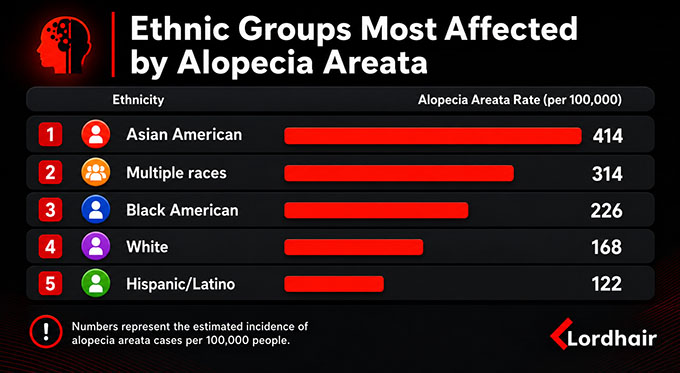
Asian Americans are disproportionately affected by alopecia areata, at more than double the rate of white Americans.
-
More than 65% of alopecia areata cases are female, regardless of ethnicity.
Why Is Hair Loss Especially Underdiagnosed in Black Women?
Hair loss among Black women deserves particular attention. A combination of genetic predisposition, cultural hairstyling practices, and systemic underdiagnosis has created what some experts describe as a quiet epidemic.
-
A major 2016 study found that 47.6% of African-American women surveyed reported hair loss on the crown or top of their head.
-
Despite this, 81.4% of those women had never seen a doctor about their hair loss issues — a staggering treatment gap.
-
Central centrifugal cicatricial alopecia (CCCA) — an inflammatory, scarring hair loss condition — is the leading cause of hair loss in Black women. It causes permanent follicle destruction and is significantly underdiagnosed.
-
Traction alopecia, caused by tension from hairstyles including braids, weaves, and relaxers, disproportionately affects Black women. Unlike CCCA, this is largely preventable.
Are Clinical Trials Diverse Enough to Cover All Ethnicities?
There is a systemic research gap that affects care quality for non-white patients: in 20 randomized controlled trials on androgenetic alopecia in the US over the past decade, 81.1% of study participants were white, 11.9% were African American, and just 3.1% were Asian. This means most evidence-based treatment protocols were developed on populations that represent a minority of global hair loss sufferers.
7. What Causes Hair Loss?
Understanding the why behind hair loss is essential — both for seeking solutions and for de-stigmatizing the experience.
What Are the Most Common Causes of Hair Loss?
-
Genetics (Androgenetic Alopecia): The dominant cause. Approximately 70% of hair loss cases have a genetic predisposition. DHT (dihydrotestosterone) is the key hormonal trigger in both sexes.
-
Telogen Effluvium: A stress-induced, typically temporary form of shedding in which the body pushes a large proportion of follicles into the resting (telogen) phase simultaneously. Triggered by illness, surgery, trauma, extreme diet change, or psychological shock. Shedding typically begins 2–4 months after the triggering event.
-
Alopecia Areata: An autoimmune disorder affecting approximately 147 million people globally.
-
Traction Alopecia: From prolonged mechanical tension on hair — braids, weaves, tight ponytails.
-
Hormonal Changes: Postpartum hair loss is nearly universal among new mothers; menopause triggers significant loss in many women. Thyroid disorders are also a major factor.
-
Nutritional Deficiency: Iron, vitamin D, zinc, and biotin deficiencies are all associated with hair thinning.
-
Medications: Chemotherapy is the most known culprit, but blood thinners, antidepressants, hormonal contraceptives, and certain blood pressure drugs can all cause shedding.
Can COVID-19 Cause Hair Loss?
One of the most significant and underappreciated hair loss stories of the past few years is the link to COVID-19. The pandemic effectively added tens of millions of people to the global pool of hair loss sufferers — many of them young, many of them women:
-
Multiple studies found that between 25% and 61% of people infected with COVID-19 experienced some degree of hair loss.
-
One study of COVID-infected female patients found 61.4% reported hair problems, with telogen effluvium accounting for 60.8% of those cases.
-
Another large study reported 52.7% of participants experienced hair loss following COVID-19 infection.
-
Hair loss typically began 2–3 months after infection and could persist for up to 6 months.
-
The mechanisms are multiple: cytokine storms, elevated cortisol, high fever, nutritional deficiencies caused by illness, and the psychological trauma of severe sickness — all are proven triggers of telogen effluvium.
-
Post-COVID hair loss created a vicious cycle: the physical shock of the illness triggered shedding, and the emotional distress of watching hair fall out triggered further shedding.
Can Stress Cause Hair Loss?
Stress is both an underrated cause of hair loss and an underrated consequence of it — creating a self-reinforcing cycle that is difficult to interrupt.
-
Women with high stress levels are 11 times more likely to experience hair loss than their lower-stress counterparts.
-
Research found that high cortisol levels reduce the synthesis of key skin elements (hyaluronan and proteoglycans) by up to 40%, directly impairing hair follicle health.
-
18% of individuals under 30 report some hair shedding due to stress or environmental factors.
-
In China, 58.9% of young adults identify sleep deprivation as their primary hair loss trigger — an indirect marker of chronic stress.
8. How Does Hair Loss Affect Mental Health?
This is where hair loss becomes more than a cosmetic issue. The psychological data is striking — and in many cases, clinically alarming.
How Common Is Anxiety in People with Hair Loss?
-
A 2025 meta-analysis of 5,553 patients with various forms of alopecia found that nearly 47% met the criteria for a clinical anxiety disorder — not mild worry, but diagnosable anxiety (95% CI: 39–54%).
-
Breaking that figure down: 35% had mild anxiety, 15% moderate, and 5% severe.
-
The mean HADS-A (Hospital Anxiety and Depression Scale) anxiety score was 7.87 — above the clinical significance threshold.
-
In a large 2025 cohort study, the most common psychiatric comorbidity in alopecia areata patients was anxiety disorders, affecting 3.1–3.6% of the 91,302-patient cohort over one year of follow-up.
-
Social phobia affects an estimated 47.5% of alopecia areata patients — nearly one in two.
Does Hair Loss Cause Depression?
-
Adults with alopecia areata are 30–38% more likely to be diagnosed with depression.
-
The lifetime prevalence of depression in alopecia patients is approximately 39%.
-
In a large 2022 cross-sectional study, 37% of AA patients experienced symptoms of depression and 34% experienced symptoms of anxiety.
-
21% of men who experience hair loss report that it has brought about feelings of depression.
-
29% of women with hair loss experience two or more symptoms of depression.
How Does Hair Loss Affect Self-Esteem and Body Image?
A comprehensive 2025 review in the British Journal of Dermatology — examining 26 studies with 1,450 participants — found:
-
78% of women with hair loss reported feelings of shame, anxiety, or depression.
-
85% of participants reported reduced self-esteem, with themes including loss of femininity and diminished attractiveness.
-
Over 60% of women avoided social interactions due to embarrassment from hair loss.
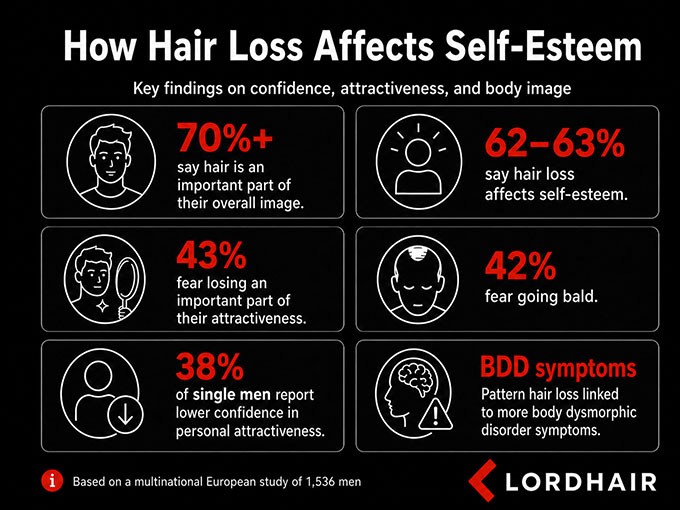
For men, a multinational European study of 1,536 men found:
-
Over 70% reported hair to be an important feature of their overall image.
-
62–63% agreed that hair loss could affect their self-esteem.
-
43% feared losing an essential part of their personal attractiveness.
-
42% expressed fear of going bald.
-
38% of men not in stable romantic relationships reported reduced self-confidence in personal attractiveness.
-
A 2025 study found that people with pattern hair loss showed significantly more symptoms of body dysmorphic disorder (BDD) compared to control groups.
Why Does Hair Loss Have Such a Deep Psychological Impact?
Recent research has mapped the precise biological pathways by which mental health and hair loss interact. Understanding these mechanisms explains why the psychological impact is not just "in your head" — it is physiological:
|
Mechanism
|
How It Works
|
|
HPA axis dysregulation
|
Stress → elevated cortisol → disrupts hair growth cycle
|
|
Immune collapse
|
Stress → CD8+ T cells attack hair follicles (primary in alopecia areata)
|
|
Chronic inflammation
|
Elevated IL-1 and TNF-α damage follicular tissue
|
|
Oxidative stress
|
Mitochondrial dysfunction → follicle miniaturization
|
|
BDNF depletion
|
Depression lowers brain-derived neurotrophic factor → impairs follicle health and emotional resilience
|
|
Gut-brain-skin axis disruption
|
Gut dysbiosis → systemic inflammation → hair loss
|
This science confirms a bidirectional relationship: psychiatric conditions can cause or worsen hair loss, and hair loss causes psychological symptoms. The cycle is self-reinforcing and genuinely difficult to break without addressing both dimensions simultaneously.
Can Hair Loss Medication Cause Mental Health Problems?
An important recent development for anyone considering pharmaceutical treatment:
-
Between 2017 and 2024, eight independent studies found a strong link between finasteride (one of the most commonly prescribed hair loss drugs) and anxiety, depression, and suicidal behavior.
-
Researchers found elevated reporting odds for suicidal ideation (up to fivefold) and hazard ratios near 2 for depression and self-harm among users.
-
The FDA added "depression" to finasteride's label in 2011, and only acknowledged suicidality risk in 2022 — 11 years later.
-
Search interest in finasteride reached 75,233 average monthly searches in 2025 — a 95% increase from 2020 and triple the 2016 figure — meaning millions more people are researching and potentially using it without full awareness of mental health risks.
9. How Does Hair Loss Affect Career, Relationships, and Daily Life?
Hair loss doesn't stay in the mirror. Its consequences spread into careers, relationships, finances, and daily quality of life in ways that are often invisible — but are increasingly well-documented.
Does Hair Loss Affect Your Career?
-
63% of women with hair loss cite career-related problems arising directly from the condition.
-
Worry about appearance in professional settings — job interviews, presentations, meetings — is one of the most commonly reported consequences.
-
Social phobia affects 47.5% of alopecia areata patients, making professional networking and client-facing roles significantly harder to navigate.
-
35% of the variation in quality of life among hair loss patients is attributed to perception of hair loss — not its objective severity. This means even mild thinning, if internalized as severe, can cause disproportionate life disruption.
Does Hair Loss Affect Relationships?
-
40% of women with hair loss report that it has affected their marriage or primary relationship.
-
38% of single men with hair loss report reduced confidence in attracting romantic partners.
-
Social withdrawal — affecting over 60% of women with hair loss — compounds relationship difficulties by reducing the social exposure that builds and sustains connections.
Why Do So Many People Wait Years Before Addressing Hair Loss?
Perhaps the most consequential statistic in this entire guide:
-
74% of people with hair loss noticed it 5 or more years before taking any action.
This delay is not rational — earlier intervention with any treatment (pharmaceutical, surgical, or non-surgical) consistently delivers better outcomes. The delay is driven by stigma, denial, and the false belief that hair loss is inevitable and untreatable. By the time most people seek help, they have already experienced years of unnecessary psychological burden.
How Much Do People Spend on Hair Loss?
When people do act, they spend significantly:
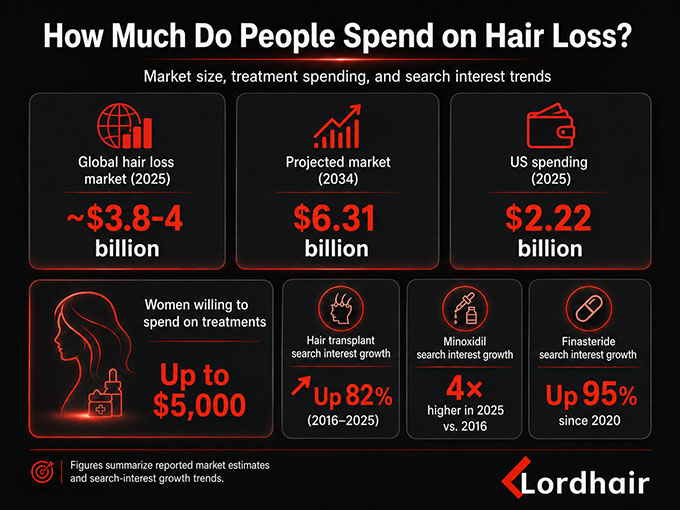
|
Metric
|
Statistic
|
|
Global hair loss market (2025)
|
~$3.8–4 billion
|
|
Projected market (2034)
|
$6.31 billion
|
|
US spending (2025)
|
$2.22 billion
|
|
Women willing to spend on treatments
|
Up to $5,000
|
|
Hair transplant search interest growth
|
Up 82% (2016–2025)
|
|
Minoxidil search interest growth
|
4× higher in 2025 vs. 2016
|
|
Finasteride search interest growth
|
Up 95% since 2020
|
10. What Hair Loss Treatments Actually Work?
Understanding the treatment landscape helps contextualize why the market is growing so rapidly — and where people are placing their hopes.
What Are the Success Rates of Hair Loss Treatments?
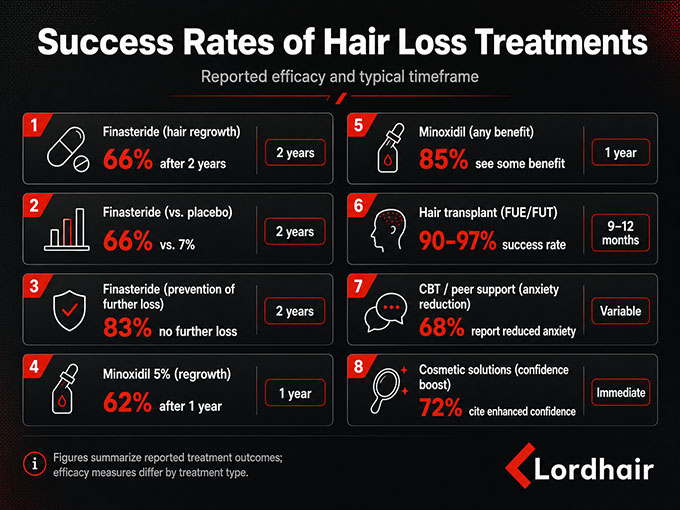
|
Treatment
|
Efficacy
|
Timeframe
|
|
Finasteride (hair regrowth)
|
66% after 2 years
|
2 years
|
|
Finasteride (vs. placebo)
|
66% vs. 7%
|
2 years
|
|
Finasteride (prevention of further loss)
|
83% no further loss
|
2 years
|
|
Minoxidil 5% (regrowth)
|
62% after 1 year
|
1 year
|
|
Minoxidil (any benefit)
|
85% see some benefit
|
1 year
|
|
Hair transplant (FUE/FUT)
|
90–97% success rate
|
9–12 months
|
|
CBT / peer support (anxiety reduction)
|
68% report reduced anxiety
|
Variable
|
|
Cosmetic solutions (confidence boost)
|
72% cite enhanced confidence
|
Immediate
|
A critical note: only 15.6% of people seeking hair transplants had tried medication beforehand — despite medical guidance recommending medication as a first-line option. Most people skip straight to surgery after years of inaction.
Does Treating Hair Loss Improve Mental Health?
Treatment isn't just about hair — it measurably restores mental health:
-
Hair transplant patients report significant increases in physical and mental health scores post-surgery, alongside measurable decreases in stress and anxiety.
-
Self-esteem scores increase meaningfully pre-op to post-op; patient satisfaction improves by an average of +30.25 points on validated scales.
-
72% of people using cosmetic hair solutions (including hair systems, wigs, and hairpieces) cite enhanced confidence and social reintegration as primary outcomes.
-
CBT combined with peer support yields anxiety reduction in 68% of participants — comparable in some studies to pharmaceutical intervention, without the side effects.
What Are the Main Hair Loss Treatment Options?
Pharmaceutical:
-
Minoxidil (topical): FDA-approved; most widely used first-line treatment. Women typically use 2% concentration; men use 5%. Slows further loss and may stimulate regrowth but does not reverse genetic loss.
-
Finasteride (oral): Prescription-only; proven efficacy but carries significant mental health risks (see Section 8). Only 15.6% of hair loss patients try it before seeking surgical options.
-
Deuruxolitinib (Leqselvi): FDA-approved in July 2024 for severe alopecia areata — a landmark new class of JAK inhibitor treatments.
-
Topical finasteride: Newer formulations designed to reduce systemic (mental health) side effects of oral use.
Surgical:
-
Hair transplants (FUE/FUT): The gold standard for permanent restoration.
-
Approximately 4.7 million procedures were performed globally in 2025.
-
An estimated 820,000 procedures in 2024 alone, a 12% year-on-year increase.
-
FUE now dominates, accounting for approximately 60% of all procedures.
-
Turkey leads globally in transplant volume; the US, UK, India, and South Korea are major markets.
-
In the US, cost ranges from $$4,000$$15,000. Canada averages $17,500.
-
Nearly 90% of people who have undergone hair transplants report satisfaction.
-
87.3% of hair transplant recipients in 2022 were men, though female demand is growing rapidly.
-
Non-Surgical Hair Systems (Hairpieces / Hair Systems / Wigs):
-
The global hair wig and hair system market is valued at approximately $$2.68$$12.6 billion in 2025, growing to $$4$$20.5 billion by 2034–35.
-
North America dominates, holding approximately 36% of the global market.
-
Approximately 42% of hair loss sufferers prefer non-surgical solutions — reflecting massive demand for quality hair systems.
-
72% of cosmetic solution users report enhanced confidence and improved social reintegration as primary outcomes.
-
Women in the US report willingness to spend up to $5,000 on the best hair loss treatments, and are more open to spending on non-pharmaceutical options than men.
-
Hair systems and wigs offer one major advantage no other treatment can match: immediate results with no waiting period, no side effects, and no surgery.
For a complete introduction to Hair Systems, read Men's Hair Systems Explained: The Complete Guide.
Emerging Treatments:
-
Stem cell therapy: By 2025, an estimated 30% of hair loss treatments are expected to incorporate stem cell protocols.
-
Low-Level Laser Therapy (LLLT): Growing as a non-invasive adjunct treatment.
-
PRP (Platelet-Rich Plasma): Increasingly used alongside transplants and standalone.
11. How Big Is the Hair Loss Industry?
The financial scale of the hair loss industry reflects both the prevalence of the condition and the deep human desire for solutions.
How Large Is the Global Hair Loss Treatment Market?
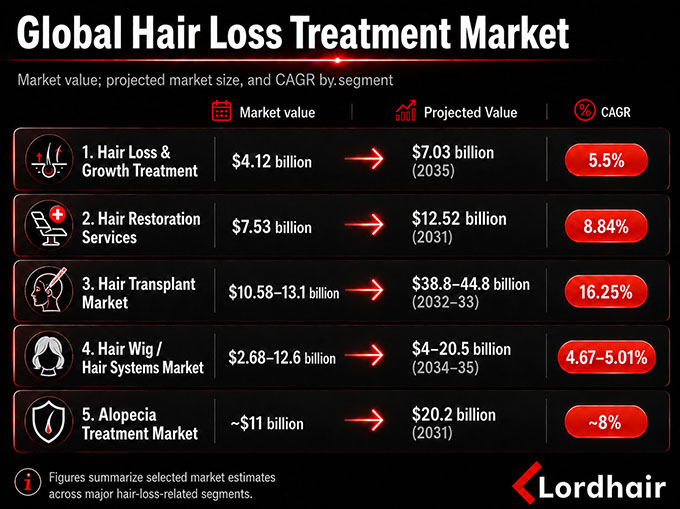
|
Segment
|
2025 Value
|
Projected Value
|
CAGR
|
|
Hair Loss & Growth Treatment
|
$4.12 billion
|
$7.03 billion (2035)
|
5.5%
|
|
Hair Restoration Services
|
$7.53 billion
|
$12.52 billion (2031)
|
8.84%
|
|
Hair Transplant Market
|
$$10.58$$13.1 billion
|
$$38.8$$44.8 billion (2032–33)
|
16.25%
|
|
Hair Wig / Hair Systems Market
|
$$2.68$$12.6 billion
|
$$4$$20.5 billion (2034–35)
|
4.67–5.01%
|
|
Alopecia Treatment Market
|
~$11 billion
|
$20.2 billion (2031)
|
~8%
|
-
North America commands the largest share of most segments, representing approximately 35–36% of the hair loss treatment market.
-
Asia-Pacific is the fastest-growing region, projected at a 9% CAGR in hair loss treatments, driven by China, Japan, India, and South Korea.
-
Online retail for hair loss products is the fastest-growing distribution channel, at 8.6% CAGR through 2030.
-
In China alone, sales of hair loss shampoos surged 387% over a single quarter on JD.com.
Are More People Searching for Hair Loss Solutions?
Search data reveals where consumer attention is moving — and it is accelerating across all major categories:
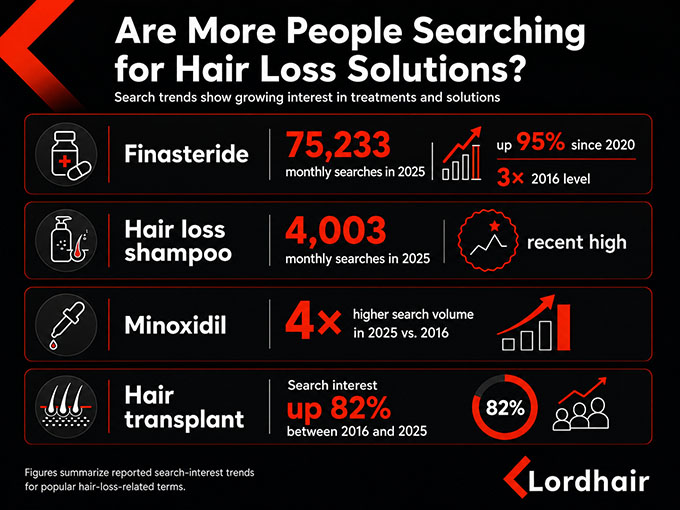
|
Search Term
|
Trend
|
|
"Finasteride"
|
75,233 monthly searches in 2025 (+95% since 2020; 3× 2016 level)
|
|
"Hair loss shampoo"
|
4,003 monthly searches in 2025 (recent high)
|
|
"Minoxidil"
|
4× higher search volume in 2025 vs. 2016
|
|
"Hair transplant"
|
Search interest up 82% between 2016 and 2025
|
Over 12.94 million Americans are projected to use hair growth products in 2024 — up from 12.42 million in 2020.
About Lordhair
Lordhair is a global leader in premium, custom hair systems for men and women. With over a decade of experience crafting natural-looking, undetectable hair solutions, Lordhair helps people of all backgrounds regain their confidence and identity — without surgery, downtime, or side effects.
The data in this article makes one thing clear: hair loss is not cosmetic — it is a health issue. And the 42% of sufferers who prefer non-surgical solutions deserve access to products that look and feel completely real.
Explore our range of men's hairpieces, custom women's toppers, and custom male wigs at lordhair.com.
You’re not alone, and you don’t have to wait.

Millions of people experience hair loss, but many delay taking action. Explore natural-looking hair replacement solutions designed for different stages of hair loss.
Sources
-
Scandinavian Biolabs. (2025). 159 Hair Loss Statistics for Journalists. scandinavianbiolabs.com
-
Chemist4U. (January 2026). Hair Loss Statistics 2025 — Facts and Stats Report. chemist-4-u.com
-
XtendedView. (January 2026). Hair Loss Statistics 2026: Who's Most at Risk Today? xtendedview.com
-
media.market.us. (February 2026). Baldness Statistics and Facts (2026). media.market.us
-
HHC Clinics. (2025). Androgenetic Alopecia Worldwide Impact. hhclinics.co.uk
-
New Look Institute. Hair Loss Across Ethnicities. newlookinstitute.com
-
Chosun Ilbo. (October 2025). South Korea hair loss patient data, ages 20–39. chosun.com
-
Korea Times. (March 2025). Online hair loss communities, youth demographics. koreatimes.co.kr
-
Mordor Intelligence. (2025). Hair Loss Treatment Products Market. mordorintelligence.com
-
Mordor Intelligence. (2026). Hair Restoration Services Market. mordorintelligence.com
-
Market Research Future. (2025). Hair Wig Market. marketresearchfuture.com
-
Grand View Research. (2024). Global Hair Transplant Market. grandviewresearch.com
-
Vera Clinic. (2025). Hair Transplant Statistics. veraclinic.net
-
Medihair. (2025). Hair Loss Statistics / Social Impact of Hair Transplants on Self-Esteem. medihair.com
-
PubMed / PMC. (February 2025). The impact, prevalence, and association of different forms of hair loss among individuals with anxiety disorder: Systematic review and meta-analysis. PMID 39928820
-
PubMed / PMC. (2025). Understanding the Association Between Mental Health and Hair Loss. PMC12186756
-
PubMed / PMC. (2025). Psychological Dimensions of Hair Transplantation: A Narrative Review. PMC12458453
-
ScienceDirect. (July 2025). Beyond hair loss: Exploring the psychiatric burden of alopecia areata in a large cohort. sciencedirect.com
-
British Journal of Dermatology. (July 2025). Psychological impact of hair loss in women: a qualitative systematic review. Oxford Academic
-
Dermatology Times. New Study Shows Prevalence of Alopecia Areata in People of Color. dermatologytimes.com
-
National Alopecia Areata Foundation. Emotional Wellness and Mental Health. naaf.org
-
The Psychiatrist. (October 2025). Hair Loss Drug Exacts a Mental Health Toll Decades in the Making. psychiatrist.com
-
PMC. (2024). Hair disorders associated with post-COVID-19 infection in females. PMC10961269
-
NCOA. (2025). Hair Loss Statistics / Mental Health and Hair Loss. ncoa.org
-
Shapiro Medical. Hair Loss, Self-Confidence & Mental Health: The Hidden Toll. shapiromedical.com
-
electroiq.com. (2025). Hair Loss Statistics 2024 By Age and Pattern.
-
Cleveland Clinic. COVID-19 Related Hair Loss / Telogen Effluvium. consultqd.clevelandclinic.org
-
Journal of the American Academy of Dermatology. (2022). Racial and Ethnic Disparities in Androgenetic Alopecia Clinical Trials.
-
ECREEE. (2026). How hair loss affects mental health. web.ecreee.org
share