


How to Wash a Hair System: Daily Routine, Tools, and Products Explained
- Written by Sarah Rowland
- | Published Sep 11, 2026
- |
- 9 min read
 Listen to the full text
You've invested in a hair system that looks incredible, great job! It has a natural hairline, the perfect density, a color that matches your own. But what you don’t always know on day one is that your system won’t maintain itself. You need to know how you wash it, how often, and what to wash it with. This will determine how long it actually lasts and how good it looks.
Daily maintenance isn't about being obsessive, though. Your hair system is real hair attached to a base, and both the base and the hair need to be cared for in a different way to your own hair. The base needs to stay clean so that the adhesive bonds will stay attached for longer periods. The hair needs moisture to stop it from drying out, going frizzy, or losing its style. If you can get your routine right then your system will look fresh for weeks. Get it wrong and you'll be replacing it far sooner than you'd like.
This blog will take you through the whole routine so you will know when it's time to wash your hair system, how to remove it safely, step-by-step washing guidance and what each product in your kit actually does.
Key Takeaways
- Washing frequency is about feel, not a calendar. Wash when product buildup or oil makes your hair feel heavy or the base slippery, usually about every 14 days.
- Daily washing does NOT shorten lifespan if done correctly. What shortens lifespan is aggressive scrubbing, hot water, and the wrong products.
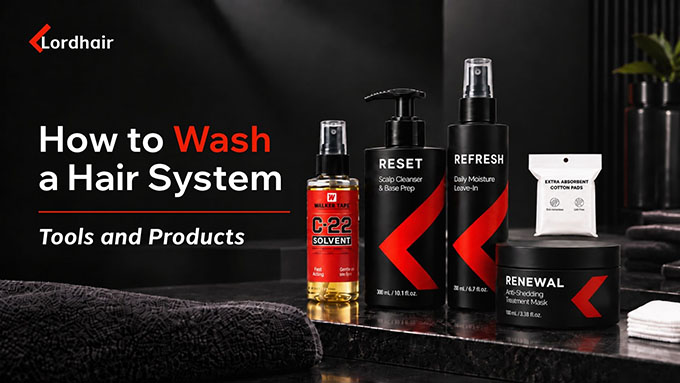
- Your core kit has five essentials: hair system shampoo, C22 solvent, 99% isopropyl alcohol, a wide-tooth comb, and a soft-bristle brush. Everything else is optional.
- C22, alcohol, and dish soap do different jobs. Never use them interchangeably because each has a specific role and specific situations where it can cause damage.
- Gray hair systems need extra care because gray/white hair is naturally drier and more prone to yellowing and brittleness.
How Often Should I Wash My Hair System and How do I Tell When to Wash It?
Forget the "every X days" rule. Your hair system will tell you when it's ready. Keep an eye out for these signs that your hair system needs washing:
- The hair feels a bit heavier than it usually does and perhaps doesn't move as naturally when you run your fingers through it.
- You’ve got a build up of styling products (hairspray, gel, fiber) which is making your hair feel slightly crusty or looking dull.
- The base near the hairline feels oily or greasy and perhaps is starting to lift very slightly.. That's your body oils and sweat working their way under the perimeter.
- You can see visible residue on the base when you lift the hairline gently.
For most people wearing their system 24/7, this is somewhere around once every two weeks. If you sweat heavily through gym sessions, manual labor, or hot climates, then you'll likely need to wash it each week. If you're in an air-conditioned office with minimal product use, you can stretch it longer.
Does Washing Daily Shorten Lifespan?
If you wash your hair system aggressively, it will shorten the lifespan. You don’t need to wash your hair system every day. For special occasions like swimming or workouts, a quick rinse after each session is enough. The key is not how often you wash it; it’s whether you give it proper care at the right time.
The real culprits behind premature hair system failure are:
- hot water that weakens adhesive bonds
- harsh sulfate shampoos that strip the hair's protective oils; rubbing or scrubbing at the base like you're removing a stain from clothing
- and towel-drying by rubbing too much
If you can be careful to avoid those four things, then you are slowing down the aging of your hair system with a proper cleaning routine.
Build Your Supply Checklist
What Do I Need for Cleaning?
Get started with these five items. They will fulfill almost all of your hair system maintenance routine:
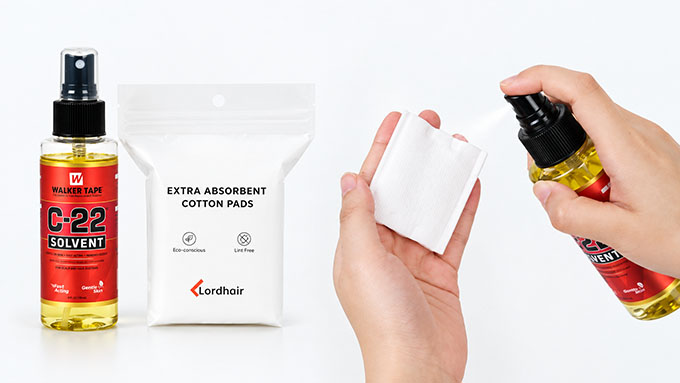
- Adhesive remover: An adhesive remover like C22 solvent breaks down the tape and glue residue on the system base without damaging the base material.
- Cotton pads: Apply C22 to it and wipe it onto your scalp to remove the hair system
- Alcohol: This is for the final base cleaning, disinfecting, and helps remove any leftover C22 or adhesive film (It’s not suitable for sensitive skin, though).
- Hair System Shampoo: You need a sulfate-free, pH-balanced shampoo designed just for human hair systems. Regular shop-bought shampoo is much too harsh so make sure you avoid it.
- Hair system conditioner: Remember to only use this on the hair (never the base), to help restore moisture after washing.
- Wide-tooth comb: You’ll need this for detangling wet hair without pulling or shedding.
How Do I Build a Full Maintenance Supply Checklist?
Now you have the most important items on the list, you can consider adding the following. They are designed to enhance your hair care.
- Leave-in conditioner: A spray-on treatment that rehydrates, detangles, and adds shine between washes.
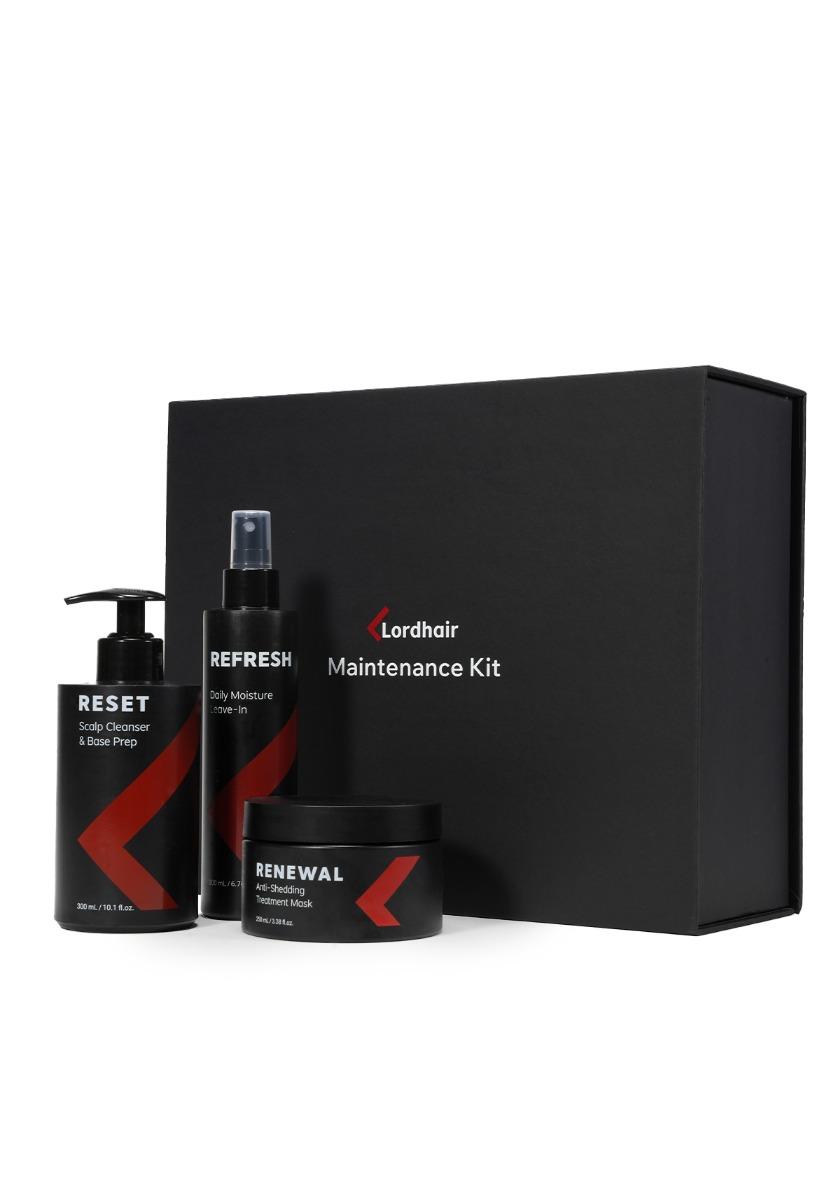
Lordhair 3R Maintenance collection: professional hair system maintenance in three single steps: Reset, Refresh, Renewal.
- Dish soap (clear, unscented) for occasional deep cleaning of heavy product buildup on the base only.
- Microfiber towel or old cotton T-shirt for blotting hair dry without friction.
- A styling mannequin head or a wig stand for washing the system whilst it’s off your head and letting it dry in shape.
- Adhesive/tape for reattachment after the wash and dry cycle.
What Comb/Brush Should I Use?
This is quite important because the wrong brush can pull hair out of the base and once hair is shed from a system, it doesn't grow back.
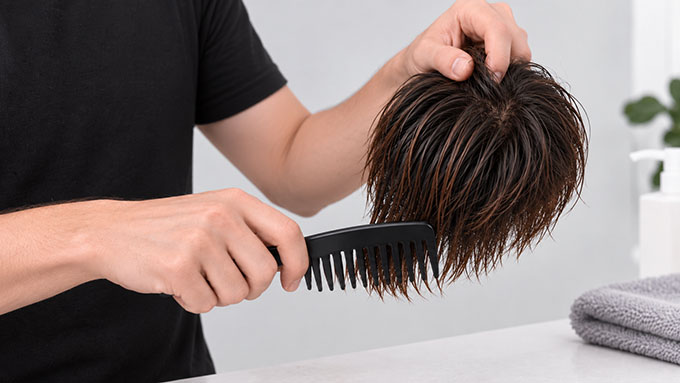
- Wet hair: Always use a wide-tooth comb. Start from the ends and work upward in small sections. Never comb from root to tip in one stroke because it creates tension and pulls hair.
- Dry hair: Use a soft boar-bristle brush or a loop brush (designed specifically for wigs and hair systems). Loop brushes have no pointed tips at the end of the bristles, so they can't snag or tear the base material.
- Avoid: Plastic brushes with ball-tipped bristles (the balls can catch on lace knots), paddle brushes with stiff nylon bristles, and any brush you'd use on your own thick biological hair.
Removing the System Before Washing
How Do I Remove a Hair System Safely?
Often damage happens at the time of removal rather than washing it. If you rush these steps you could tear the lace, stretch the poly, and in some cases pull out hair. Remember to follow these recommended actions, so you will be removing your hair system safely:
- Apply C22 solvent along the hairline and any bonded edges. Use a small brush or the bottle's applicator tip to work it under the perimeter.
- Wait 60–90 seconds. The solvent needs time to break down the adhesive. If the system isn't lifting easily, apply more solvent and wait longer — don't pull before it's ready.
- Lift gently from the edges inward. Use your fingertips, not your nails. For lace front hair systems, it’s better to start at a sideburn or the nape as the front is the most delicate.
- Once the system is off, set it on your mannequin head or a clean towel with the base facing up. You're ready to clean.
Does Frequent Removal Damage the System?
Hair systems gradually wear out through every wear, removal and application, and it’s inevitable. But proper handling can minimize the damage and extend the lifespan. Always use solvent and wait for it to work. Never peel it off dry without using solvent, even if you're in a hurry. Every time you peel dry adhesive off lace or poly, you stretch the material and can tear tiny holes.
If you're removing and reattaching weekly (normal for many wearers), the system will hold up fine as long as you're patient with the solvent. The base material is designed for repeated removal and reattachment, not for being torn off.
Watch how to remove and clean your hair system in action.
The Washing Process, Step by Step
Once your system is removed, here's how to get it fully clean and ready to wear again.
- Step 1: Pre-Clean the Base
Spray C22 onto the underside of the base, right where the adhesive was. Give it 30 seconds to break down, then wipe away the dissolved adhesive with a cotton pad. Fold to a fresh section of the pad as you go, and repeat until the base feels smooth with no tacky spots left. - Step 2: Wipe with Alcohol
Dampen a cotton pad with 99% isopropyl alcohol and go over the base one more time. This clears any oily residue from the C22 and leaves a clean, dry surface that adhesive will bond to properly later. - Step 3: Rinse
Hold the system under cool or lukewarm water, and let it flow from the base outward through the hair. This keeps water pressure from pushing hair back through the lace. - Step 4: Shampoo
Work a small amount of RESET cleanser into your palms and press it gently into the hair, from mid-lengths to ends, in a squeezing motion rather than rubbing. Don't pile the hair on top of the base; that's what causes tangles. - Step 5: Rinse Again
Same direction, base to ends, cool water, until it runs completely clear. Leftover shampoo makes the hair look dull and feel heavy. - Step 6: Condition (Recommended)
Apply RENEWAL treatment mask to the mid-lengths and ends only. Keep it off the base and away from the first inch of hair near the knots; conditioner there can loosen the knots and cause shedding. Leave it for 1–2 minutes, then rinse. - Step 7: Blot Dry
Lay the system on a microfiber towel or cotton T-shirt and press gently to soak up water. No rubbing, wringing, or twisting. - Step 8: Detangle
While the hair is still damp, work through it with a wide-tooth comb, starting at the ends and moving up. - Step 9: Air Dry
Set the system back on the mannequin head and let it air dry completely. A hair dryer on the cool setting works if you're short on time, but skip the heat; it dries out the hair and can warp poly bases. - Step 10: Style and Reattach
Once it's fully dry, brush it out with a soft-bristle brush, apply your styling product, and reattach with fresh adhesive or tape.
Check out our Hair System Maintenance guide for more detailed instructions.
Product Deep-Dive: What Each Cleaner Actually Does
You've got three heavy-duty cleaners in your kit — C22, alcohol, and dish soap. Being clear liquids, they all look similar but do very different jobs. Let’s introduce you to them so that you don’t make a common mistake of using the wrong one at the wrong time.
What Does C22 Do?
C22 is a citrus-based adhesive solvent and it’s designed to break down the tape and glue residue on the base so you can wipe it away without any scraping or pulling.
- When to use it: During removal when you are lifting the system from your head, and and during base cleaning so that it can dissolve any leftover adhesive.
- When NOT to use it: On the hair itself. C22 is oily and will make the hair greasy and limp if it gets on the strands. It's a solvent, not a daily refresher.
- Important: Always follow C22 with an alcohol wipe. If you leave C22 residue on the base, your next adhesive bond will fail because the surface is oily.
What Does Alcohol Do?
99% isopropyl alcohol is a degreaser and disinfectant. It evaporates quickly, leaves no residue on the base, and cuts through oils, sweat, and any leftover C22.
- When to use it: After cleaning with C22, use it to wipe the base and ensure a clean bonding surface. Also useful for spot-cleaning small base areas between full washes, and for cleaning your tools (comb, brush, mannequin head). Look for one that is sold as ‘skin safe’.
- When NOT to use it: On the hair as a regular treatment. Alcohol is drying although occasional contact is fine, but spraying it on the hair daily will strip moisture and cause frizz and breakage. It also shouldn't be your main adhesive remover because it evaporates too fast to break down heavy glue.
- Note: 91% or 99% isopropyl alcohol performs better than 70% pharmacy rubbing alcohol. The lower percentages contain too much water and may not clean the base as effectively.
What Does Dish Soap Do?
Unusual choice, huh? But a clear, unscented dish soap is a great degreaser, but should only be used for the base. This is because it cuts through built-up oils, sweat, and product residue more effectively than hair system shampoo does.
- When to use it: Only use it when regular shampoo isn't cutting through the buildup. It’s especially useful if you use heavy styling products (waxes, pomades, gels) that accumulate over time.
- When NOT to use it: On the hair. Dish soap is designed to cut through grease, so if you use it on your hair system it will strip every bit of moisture and protective oil from the hair, leaving it dry, brittle, and frizzy. Never use it as a replacement for hair system shampoo. And avoid colored or scented dish soaps because the dyes and fragrances can discolor light or gray hair systems.
After the Wash: Drying and Brushing
Can I Brush It Wet?
Yes, but make sure to brush it gently with a wide-tooth comb. Wet hair is more prone to breakage than dry hair, and the knots in the base are slightly looser when wet.
You need to brush your hair whilst it’s damp rather than dripping wet. Start combing from the very ends in small sections, hold the hair a few inches above where you're combing to create tension support, which also prevents pulling at the roots. Work your way up slowly and never yank through tangles. If you hit a stubborn knot, then hold your hair above it and work the knot loose with your fingers first.
Will Curl/Wave Loosen After Washing?
Some loosening is normal and expected, especially in the first 2–3 washes. Hair systems with permed texture (curls, waves, body) are set with chemicals during manufacturing, and the initial washes release some of the setting solution. This is not a quality problem; it's the system settling into its natural texture.
What's not normal are the curls completely straightening after one wash, or waves disappearing entirely. If that does happen, then the system may have been poorly permed, or the hair was over-processed. Mild loosening, for example, tight ringlets becoming softer waves, is part of the break-in period so that’s expected.
To preserve the texture, make sure to avoid hot water and heavy conditioners that weigh curls down. You can scrunch your hair gently while it's damp to encourage the curl pattern to re-form as it dries.
Is Frizzing After Washing a Quality Problem?
Not usually. Frizzing after washing is almost always a care issue, not a hair quality issue. The most common causes are:
- Using the wrong shampoo - sulfate-based drugstore shampoo strips moisture
- Not using conditioner or applying it only to the ends when the mid-lengths need it too
- Towel-drying by rubbing — the friction lifts the hair cuticle and creates frizz
- Using heat (hot water, hot hair dryer), which dries out the hair
- Not using a leave-in product between washes to maintain moisture.
If you've corrected all of these and the hair is still frizzy after every wash, then it may be a quality issue. But try the care fixes first; nine times out of ten, that's where the problem is.
Watch our Hair System Tutorial: How to Deal with Frizzy Hair for some extra tips.
Special Situations
Best Way to Wash a Gray Hair Unit
Gray and white hair systems need extra attention because gray hair is naturally drier, more porous, and more fragile than pigmented hair. It's also more prone to yellowing from environmental factors and product buildup.
For gray systems:
- Wash slightly less frequently. Aim for every 10–14 days instead of weekly, if your lifestyle allows. Gray hair doesn't produce the same oils, so it doesn't get as oily as your bio hair. Over-washing accelerates dryness.
- Condition generously because gray hair drinks up moisture. Leave the conditioner on for 2–3 minutes instead of 1.
- Avoid dish soap entirely on gray systems. It's too harsh and can accelerate yellowing and dryness.
- Use Refresh or a similar leave-in conditioner between washes. The extra hydration keeps gray hair soft and prevents the wiry texture that gray systems can develop when dry.
Washing and Touch-Up After Workouts and Sweating
If you exercise regularly or sweat heavily, you don't necessarily need to do a full system removal and wash every time. Here's the tiered approach:
- Light sweat (a brisk walk, mild gym session): Rinse the hair with cool water for 30–60 seconds, then apply a small amount of Refresh. This flushes out sweat salts without stripping the hair. You can do this while the system is still on your head.
- Heavy sweat (intense workout, hot yoga, manual labor): Do a full washafter heavy sweating. Sweat contains salts and urea that can break down adhesive bonds over time and irritate the scalp under the system. If you can't do a full removal immediately, at least rinse with cool water and do a proper wash as soon as possible.
- Touch-up between washes: If the front hairline starts to lift from sweat, you can do a spot repair where you just lift the affected edge, clean the base and your skin with C22 on a cotton pad and let it dry, and reapply the tape or glue. You don't need to remove the whole system for a small edge lift.
The key rule is never let sweat sit on the system for more than a day. It's not just about smell, the sweat residue degrades both the hair and the adhesive bond.
Conclusion: Your Quick-Reference Checklist
A hair system is an investment, and the routine above is what protects that investment. Remember, you don't need to be perfect at it, just be consistent. Using cool water, gentle products, the right tools, and being patient during removal will keep your system looking fresh far longer than any expensive products ever could.
Here’s a final checklist to keep in your bathroom:
- C22 solvent (adhesive removal)
- Sulfate-free hair system shampoo
- Hair system conditioner
- 99% isopropyl alcohol (base cleaning)
- Clear unscented dish soap (occasional deep clean)
- Leave-in conditioner (between-wash hydration)
- Wide-tooth comb (for wet hair)
- Soft boar-bristle or loop brush (for dry hair)
- Microfiber towel or cotton T-shirt
- Mannequin head or wig stand
- Fresh adhesive/tape for reattachment
If you are looking for support or advice about hair system care then get in touch with us.

Only Discounts & Bonus Gifts


FAQs
How often should I wash my hair system?
When your hair feels a bit heavy, you can see the buildup of products, or the base feels slippery, which is typically every 7–14 days. If you sweat a lot then you may need weekly washes, where office workers can likely stretch to two weeks.
Does washing shorten the system's lifespan?
Daily wear and maintenance can wear out a hairpiece over time. But proper care can minimize the impact and make your hairpiece last longer. Aggressive scrubbing, hot water, and harsh products, these are the things to avoid.
Can I use regular shampoo on my hair system?
No. Regular drugstore shampoo contains sulfates that will strip your hair system of its natural moisture and can loosen the knots. For better longevity, make sure to use a sulfate-free shampoo designed for hair systems.
Can I brush my hair system while it's wet?
Yes, but please only use a wide-tooth comb, starting from the ends and working carefully towards the base. Never use a brush on wet hair, and never comb from root to tip in one stroke.
Do I need to remove my system after every workout?
Not at all. Light sweat can be rinsed with cool water. Heavy sweat requires a full wash, but you don't need to remove the system immediately after every gym session.


